Corporate E-Waste Pickup in Mumbai: What Actually Happens on Collection Day
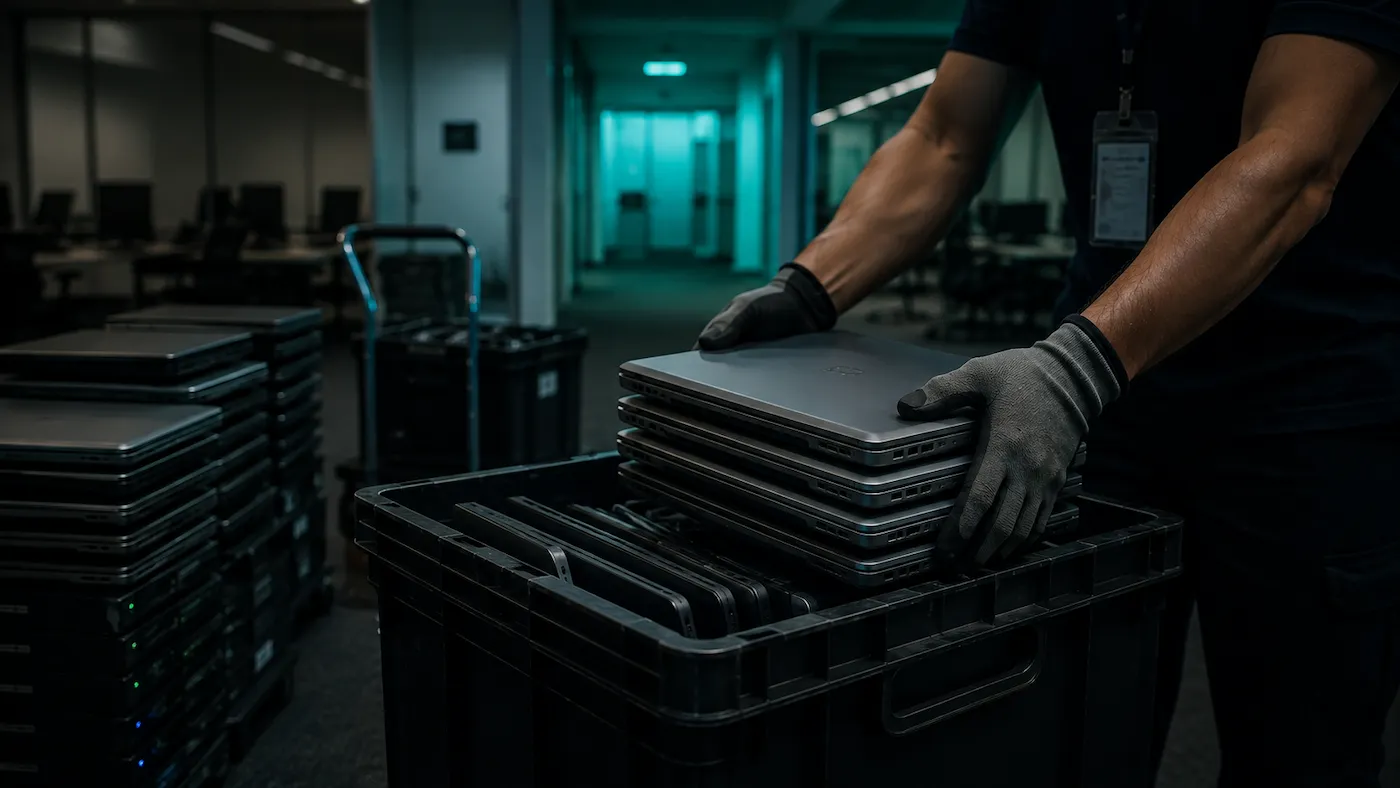
A corporate e-waste pickup takes between one and four hours for a typical office batch. You prepare almost nothing: the collection team packs and loads. What you should have by the end of the day is a signed record of what left the building and which authorized recycler it went to.
The single biggest cause of a failed or delayed pickup is building access paperwork, not the equipment itself.
If you have never arranged one before, a corporate e-waste collection sounds like it should be complicated. It usually is not. But there are a handful of things that reliably cause a scheduled pickup to turn into a wasted trip, and almost all of them are avoidable with one phone call in advance.
This is what the day actually looks like.
Before the day
You send a rough list. Approximate counts by device type. “About 40 laptops, 15 desktops, 3 servers, a cupboard of monitors, and a box of cables” is a perfectly adequate starting point. You do not need to build an inventory, and you should not delay the pickup to build one: the equipment sitting in the storeroom is the risk, not the absence of a spreadsheet.
Scope gets confirmed. This is where anything unusual should surface: server racks that need de-racking, equipment on an upper floor with no service lift, UPS batteries, items under lease that cannot be disposed of, or equipment your information security policy says must be destroyed before it leaves the premises. All of these are workable. None of them are workable if they are discovered on the day.
You get a date and a time window. Pickup happens within 1 to 3 working days of the agreed price, anywhere in India. On the Andheri-Saki Naka corridor, where our office is, it is often quicker.
The part that goes wrong: building access
In our experience this causes more failed pickups than every other factor combined, and it is entirely a Mumbai commercial-property problem.
Depending on your building, some combination of the following will apply:
- A material outward gate pass, signed by an authorised person in your organisation, listing what is leaving. Most commercial buildings will not let goods leave without one.
- A service lift booking. Many towers have one goods lift shared by every tenant, booked in slots. Turning up without a slot means waiting, sometimes for hours.
- A loading bay slot, particularly in the Lower Parel, Worli and BKC towers.
- Vehicle entry approval with the registration number submitted in advance: standard in IT parks and MIDC premises across Airoli, Mahape and Andheri MIDC.
- Bonded zone procedures if you are inside SEEPZ, which has its own customs-related material movement process.
None of this is difficult. All of it takes a day or two of lead time. The right question to ask your facilities team, a full working day before the pickup, is simply: what do we need to move goods out of this building?
On site, step by step
1. Arrival and check-in. The team reports to security, presents the gate pass and confirms the collection point with your contact.
2. Walkthrough. A quick look at what is actually there. In practice this almost always turns up more than the original list: a second cupboard, a stack of monitors behind a door, the cable box. That is normal and it is not a problem; it just means the count changes.
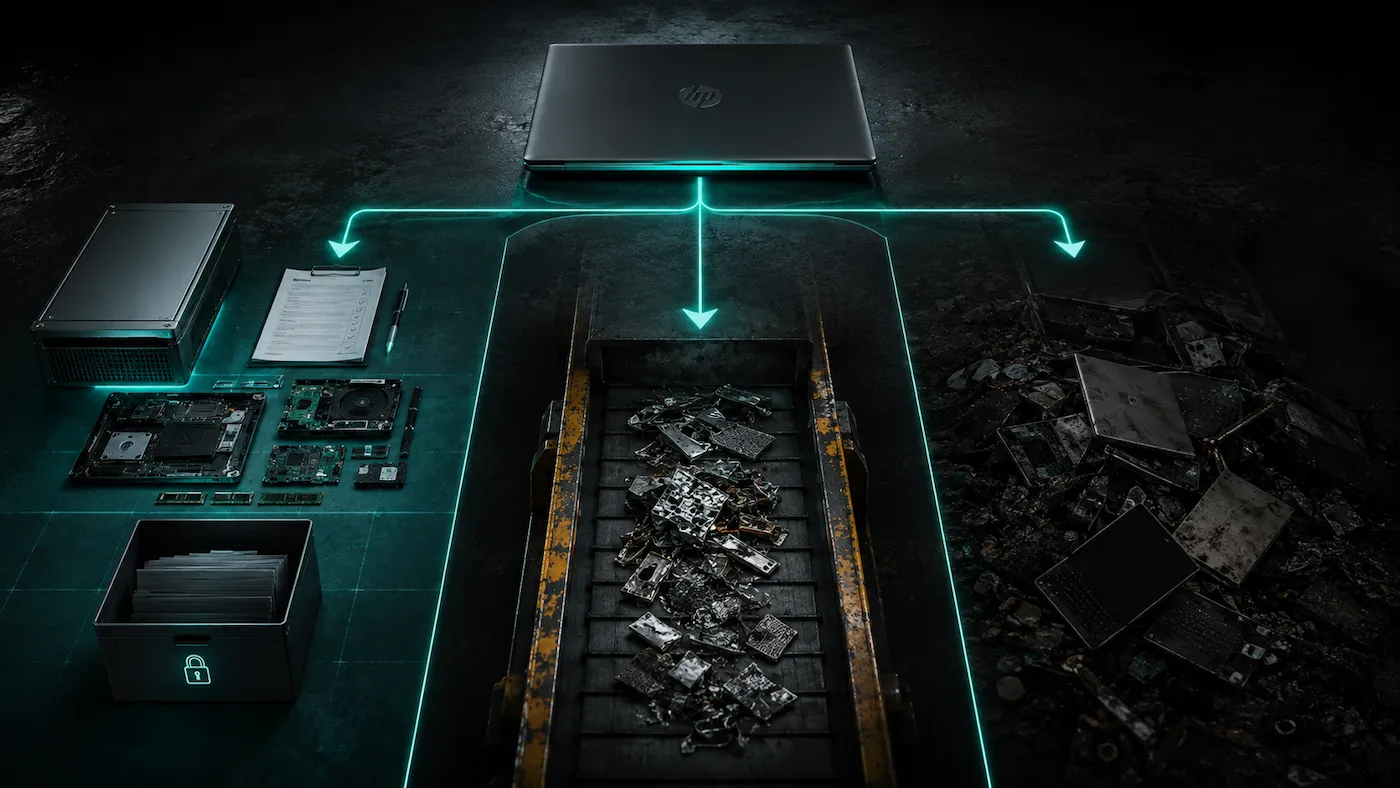
3. Segregation. Equipment is separated into categories: media-bearing devices, non-data-bearing IT, batteries and UPS units, and cabling and accessories. Media-bearing devices are handled separately from this point on, because they are the ones the data process applies to.
4. Counting and recording. Devices are counted by category, and where drives are being removed on site, drive counts are recorded before anything moves. This matters more than it sounds: a drive count cannot be reconstructed after the fact.
5. Packing and loading. Your team does not need to do this. Equipment is packed for transport and loaded.
6. Documentation and sign-off. The record of what left the premises is completed and signed by your representative before the vehicle departs. Read it before you sign it. If the counts do not match what you saw loaded, say so then, not next week.
For a typical office batch, fifty to a hundred devices, the whole thing takes two to three hours. A full floor decommission or a server room clearance is a longer, sometimes phased exercise.
After the vehicle leaves
The equipment goes to the processing facility. Media-bearing devices go through the data destruction process: software erasure, degaussing or physical shredding, depending on the media type and sensitivity agreed at scoping. That happens before any assessment of resale value and before any dismantling.
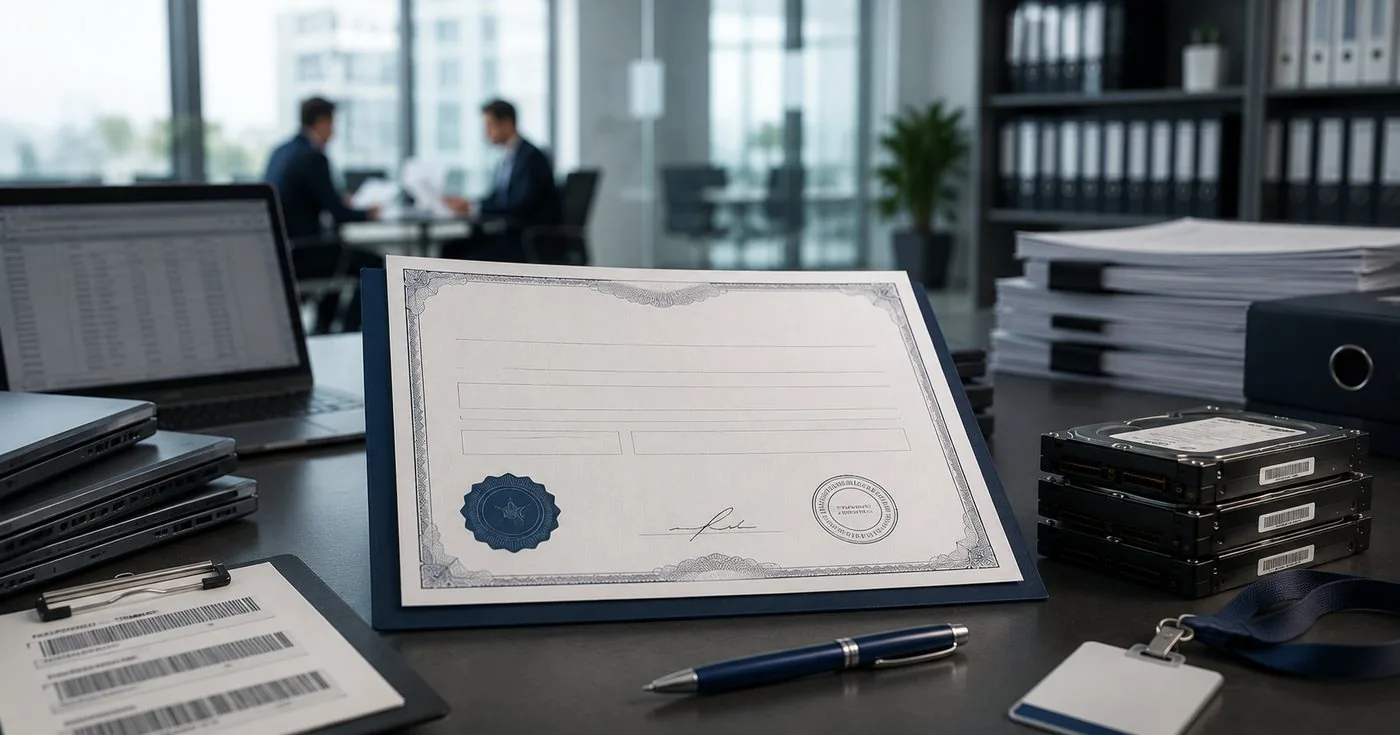
Once processing is complete, you receive the Certificate of Destruction. Timing depends on volume.
Two documents should end up in your file:
- The collection record, showing what left your premises, when, and which authorized recycler received it. This is the record that shows your e-waste went to an authorised recycler, as the E-Waste (Management) Rules, 2022 expect.
- The Certificate of Destruction, stating what was destroyed and by what method, issued after the destruction has actually taken place.
File both alongside your information security records, not in the facilities folder. The person who will need them in eighteen months is an auditor, and they will not think to look in facilities.
Five things that slow a pickup down
- No gate pass. The most common cause of a wasted trip. Ask your facilities team a day ahead.
- Waiting to build a perfect inventory. We have seen clearances postponed for eight months over a spreadsheet. The equipment sitting there is the risk; the spreadsheet is not.
- Equipment scattered across floors. Consolidating to one room the day before turns a four-hour job into a two-hour one.
- Undeclared server racks or UPS batteries. Both need different handling and sometimes different equipment. Mention them at scoping.
- Nobody authorised on site. Someone has to sign the outward pass and the collection record. If that person is in a meeting all afternoon, the vehicle waits.
None of these are serious. They are just the difference between one clean visit and three attempts.
If you want to arrange a collection, the practical detail is on our corporate e-waste pickup page, and coverage by area is listed under service areas.