ITAD vs E-Waste Recycling vs Scrap Dealer: What's the Difference?
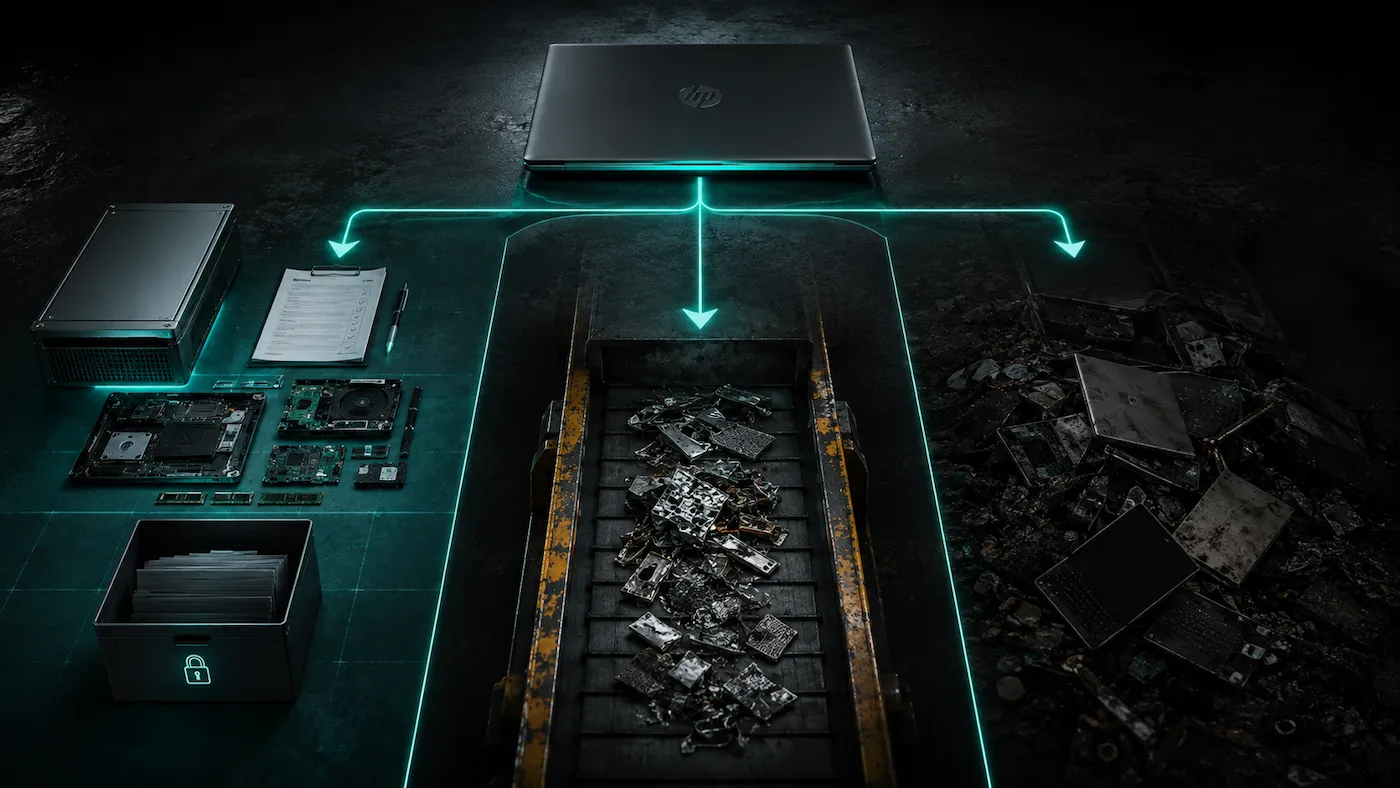
A scrap dealer buys material. An e-waste recycler processes material legally. An ITAD provider manages the retirement of IT assets, including the data on them, and produces the documentation. All three will take your old laptops. Only one of them leaves you with something you can show an auditor.
If the equipment never held data and you are not subject to any audit, a recycler is enough. If it held company or customer data, you need ITAD.
Three services, one confused market
In India these three terms get used as if they mean the same thing. Search for “e-waste company Mumbai” and you will get scrap buyers, authorized recyclers and ITAD providers on the same results page, all describing themselves in similar language.
They are genuinely different services with different outputs, and the difference only becomes visible at the moment someone asks you a question about a device that left your building eighteen months ago.
Side by side
| Scrap dealer | E-waste recycler | ITAD provider | |
|---|---|---|---|
| Primary business | Buying material for resale | Legally processing e-waste | Managing IT asset retirement end to end |
| Regulatory authorization | Usually none | CPCB / State board authorized | Works through an authorized recycler |
| Data destruction | No | Sometimes, as an add-on | Core service, before anything else happens |
| Documentation you receive | A cash receipt, at best | E-waste manifest and recycling certificate | Certificate of Destruction plus manifest |
| Non-working equipment | Often refused | Accepted | Accepted |
| Resale value returned to you | Immediate cash, unverified basis | Varies | Assessed after data destruction, offset against cost |
| Who takes the risk if data leaks | You | You, unless destruction was contracted | Shared, under written agreement |
| Right for | Household items, no data | Bulk e-waste with no data risk | Corporate IT that held data |
What a scrap dealer actually does
A scrap dealer is a materials trader. They buy your old equipment because it contains copper, aluminium, steel and boards worth money by weight, and because some units can be resold as working stock.
That is a legitimate business, and for a household clearing out an old television it is entirely appropriate. The problems appear only when the equipment belonged to a company.
- No data step. The dealer has no reason to wipe anything. Drives leave your premises with their contents intact.
- No record. Cash changes hands. Nothing is written down that connects your organisation to a disposal event.
- No visibility downstream. Once the equipment is sold on, there is no way to establish where it went, including whether working machines were resold with your data still on them.
- Selective collection. Dealers take what is worth money and leave what is not, which is why storerooms end up holding the dead equipment nobody wanted to buy.
What an e-waste recycler does
An authorized e-waste recycler holds a Consent to Operate from the state pollution control board, granted under the environmental legislation and the E-Waste (Management) Rules, 2022. That authorization is the meaningful difference: it means the facility is inspected, its processing methods are on record, and it is accountable for what it does with hazardous fractions.
A recycler will collect any condition of equipment, process it in compliance with environmental rules, and issue the manifest and a recycling certificate. For a company disposing of, say, a room of broken monitors and cabling, that is exactly the right service and nothing more is needed.
What a recycler is not built to do is manage the data question. Some offer destruction as an add-on service, and some do it well. But their core competence is materials and environmental compliance, and their documentation is designed around weight and category, because that is what environmental regulation asks for.
What ITAD adds
IT Asset Disposition treats the equipment as an asset with a data problem attached, rather than as material with a weight.
Practically, an ITAD provider adds four things on top of authorized recycling:
- Data destruction as the first step, not an add-on. Every media-bearing device is wiped, degaussed or physically destroyed before anything else happens to it: before resale assessment, before dismantling.
- Documentation built for an audit rather than for an environmental return. A Certificate of Destruction stating what was destroyed, by what method, and when.
- Value recovery handled properly. Equipment that still has resale value is assessed after destruction, so the value comes back to you without the data going with it.
- A managed process. Scoping, building access, gate passes, scheduled collection, multi-site coordination: the logistics of getting equipment out of a working office without disrupting it.
The recycling still happens, and it still happens at an authorized facility. ITAD is not an alternative to recycling. It is a layer on top of it that handles the part environmental regulation was never designed to cover.
Which one do you need
A simple decision path:
- Did the equipment ever store data? If yes, laptops, desktops, servers, phones, copiers with hard drives, loose drives, backup tapes, you need ITAD.
- Is your organisation subject to any information security audit, client security review, or regulatory oversight? If yes, you need documentation that names methods and dates. That is ITAD.
- Is it bulk equipment that never held data: monitors, cabling, UPS units, printers without storage? An authorized recycler is sufficient.
- Is it a household item? Any authorized recycler, or a municipal collection point.
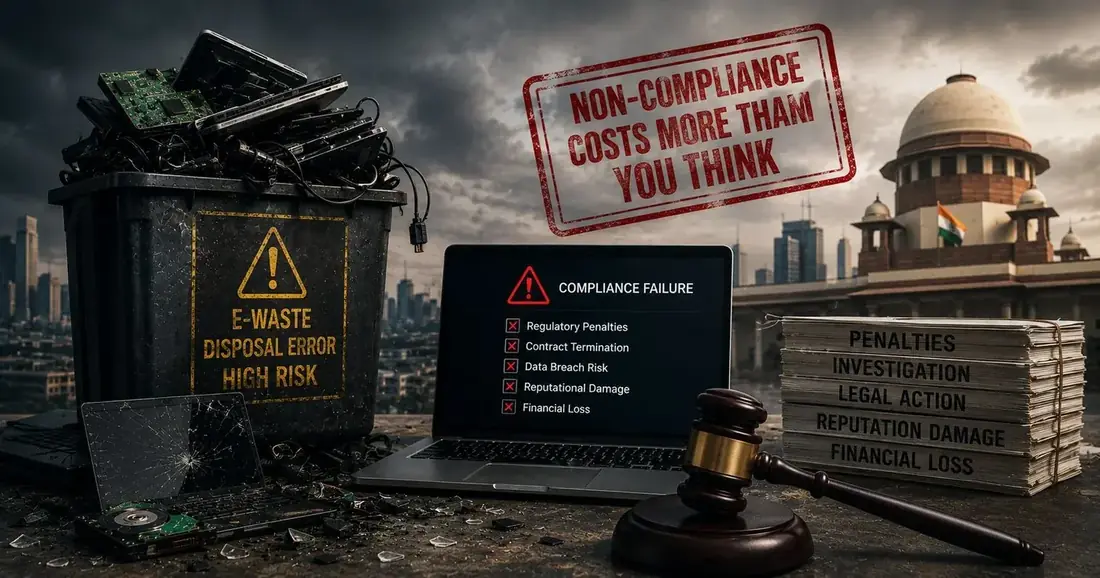
One last practical note. Price is a poor way to choose between these, because the cheapest option is almost always the scrap dealer who pays you cash and leaves no record. The real cost of that route does not appear on the day. It appears the first time somebody asks a question you cannot answer.
If you are working out which of these your organisation currently uses, and many IT heads are genuinely unsure, our free exposure score takes about ninety seconds and tells you where the gaps are.