DPDP and End-of-Life IT Assets: What the Act and Rules Actually Require
What the DPDP Act and 2025 Rules mean for retired laptops, servers and drives: security safeguards, erasure, the one-year retention rule, timelines and the evidence to keep.
Written for the people who have to answer for what happened to a retired device: IT heads, compliance officers, and procurement teams in Mumbai and across India.

What the DPDP Act and 2025 Rules mean for retired laptops, servers and drives: security safeguards, erasure, the one-year retention rule, timelines and the evidence to keep.

The DPDP Act governs the data on a retired device; the E-Waste Rules govern the hardware. What each requires, who it applies to, the penalties, and the documents that cover both.

The DPDP Act penalty schedule explained for IT teams: ₹250 crore for failed security safeguards, ₹200 crore for breach notice failures, and how device disposal fits in.

A practical DPDP checklist for startup founders and developers: data mapping, retention, encryption, processor contracts, breach response, grievance contact, and retiring devices safely.

Where India’s e-waste goes: official generation and recycling figures, the informal chain in places like Seelampur, the health cost, and what happens inside an authorised plant.

Twelve IT asset disposition companies operating in India, listed alphabetically with what each does, plus the questions to ask any ITAD vendor before you hand over a drive.

Ten e-waste recycling and management companies serving Mumbai, taken from the MPCB register, with where they are and what they do, plus how to check a recycler’s authorisation yourself.

An office shifting checklist for IT teams: what to retire before the move, the data-bearing devices people forget, and the documents to collect afterwards.

What banks, NBFCs and other regulated entities in India should document when they retire IT: policy, vendor due diligence, serial-level records and certificates.

Does a factory reset delete data permanently? What a reset really does on Windows, Mac, Android and iPhone, and why it does not count as data destruction for an audit.

The IT checklist for retiring company laptops: Autopilot and Intune, Apple Business Manager, BIOS passwords, BitLocker, batteries and the serial list.

How to turn ad-hoc IT disposal into a documented control that survives an ISO 27001 audit, a client security review or a regulator's question, in about a week of actual work.

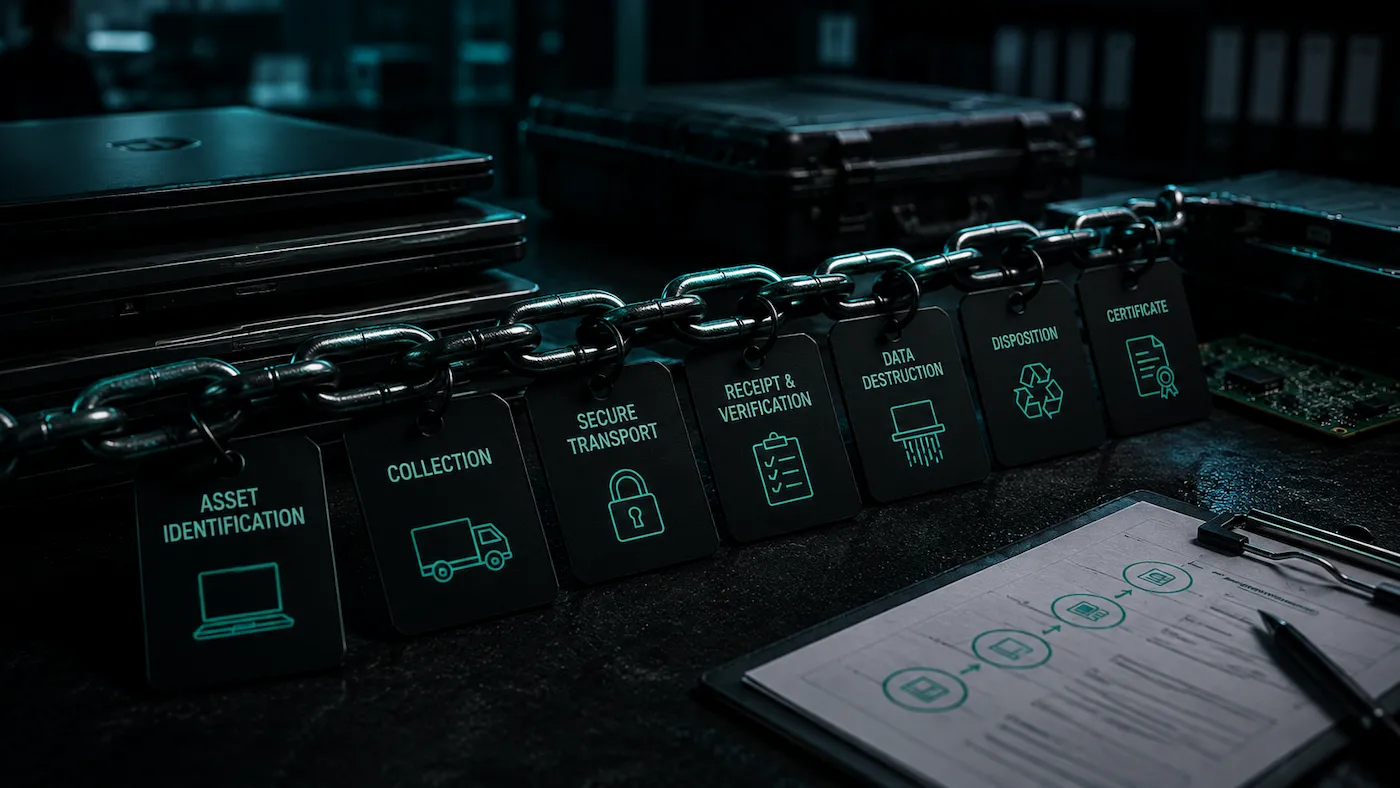
Chain of custody is the phrase every ITAD vendor uses and few can evidence. Seven specific questions that separate a documented process from a confident one.

How to check whether an e-waste collector near you is actually authorized, what to ask before handing anything over, and what a business needs that a household doesn't.

EPR full form, what it actually requires, who it applies to, and the difference between a producer's EPR obligation and a bulk consumer's disposal duty under the E-Waste Rules 2022.

India's Digital Personal Data Protection Act 2023 changed what happens when company devices are retired. Here is what the law actually says about erasure, and what it means for IT asset disposal.

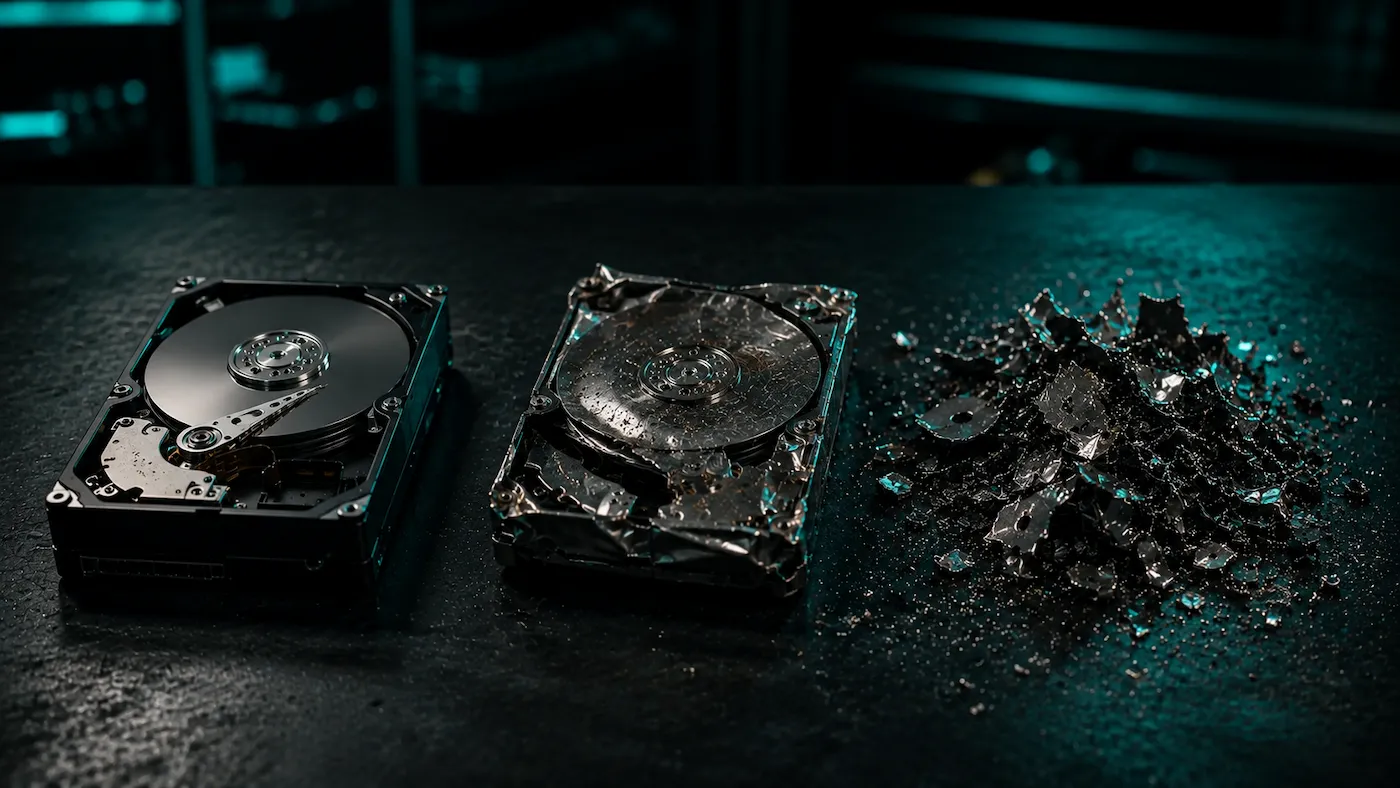
Three methods of destroying data on a hard drive, and they are not interchangeable. What each one does, which works on SSDs, which preserves resale value, and how to choose per drive.

Three different services get used interchangeably in India, and they are not the same thing. A plain comparison of ITAD, e-waste recycling and scrap dealing: what each does, what each leaves behind, and which one your situation needs.

A step-by-step account of a corporate e-waste pickup: what you need to prepare, what happens on site, how long it takes, and what paperwork you should have in hand by the end of it.

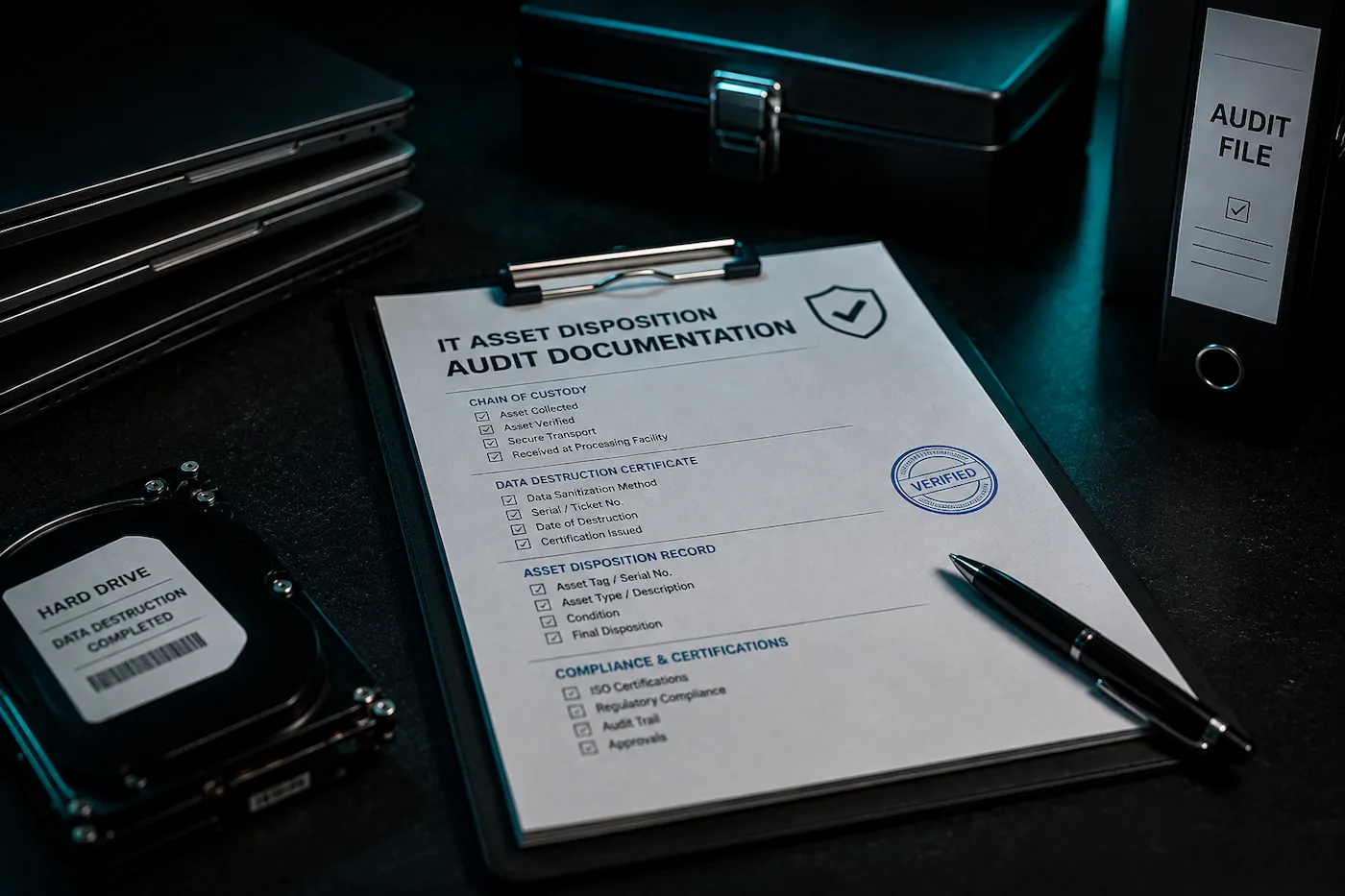
What a Certificate of Destruction needs to contain to survive an audit, and the warning signs of one that proves nothing.

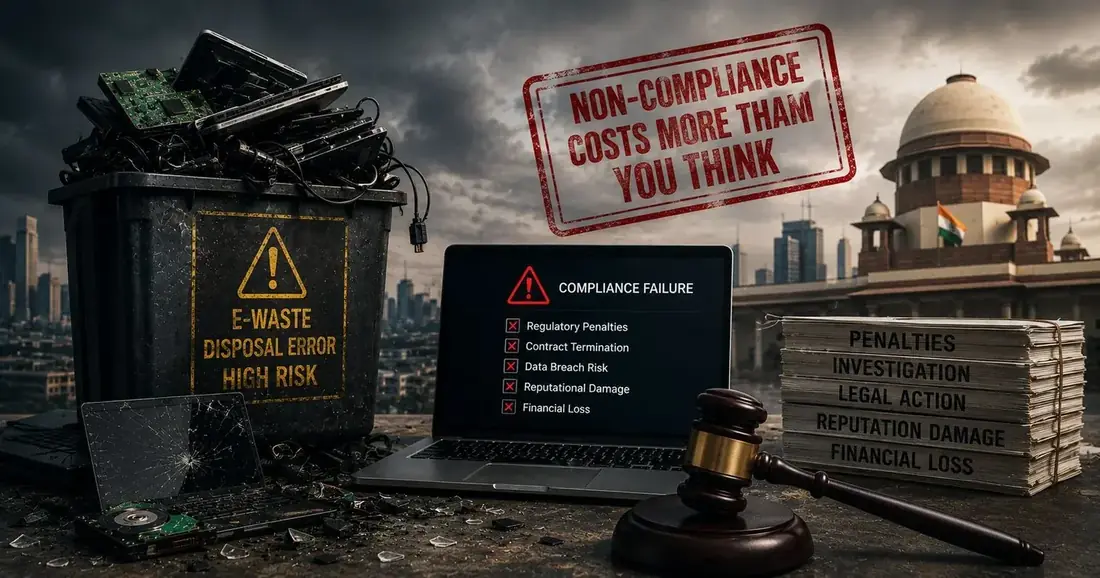
The real consequences of improper e-waste disposal for Indian businesses, regulatory, contractual, and reputational, and how exposure actually surfaces in practice.

Why deleting and reformatting doesn't work, what secure erasure actually means for HDDs and SSDs, and when physical destruction is the only defensible option.

What MPCB authorization means for Maharashtra businesses disposing of IT assets, what your vendor must hold, and what stays your responsibility as the waste generator.
Call us directly: we’ll scope your IT asset disposal in minutes.
+91 973 973 2048Monday-Saturday · 9 AM to 8 PM
Popular searches: data destruction, hard drive destruction, laptop buyback, certificate of destruction.